Jake Lewellen (00:01.131)
Welcome back to another episode of The Bourbon Lens with your host Jake. We are excited to talk to Kaveh today.
Something went wrong. They’re not being recorded anymore. Okay, well, I don’t know. We’ll fix that on the back end. Welcome back to another episode of the Burb and Lens with your host Jake. I’m excited to talk to you all about… Oh man, I got confused. We’ll do this again. Outtakes, baby.
Kaveh (00:23.97)
Yeah, take your time.
Jake Lewellen (00:25.751)
back to another episode of The Bourbon Lens with your host Jake. Scott’s not able to be here today, but we’re excited to talk all things rabbit hole with Kaveh Zamanian today. So sit back and buckle into the latest episode of The Bourbon Lens. Kaveh, it’s good to connect with you today. It’s been a little bit over a year. A lot has continued to grow and change in the bourbon and whiskey world, but how are things with you?
Kaveh (00:48.238)
Doing great, Jake. It’s great to be back and thanks for having me again. Yeah, it’s been an exciting chapter for Rabbit Hole and some of the other joint venture brands that we have since our last conversation. And again, happy to be here and look forward to diving in.
Jake Lewellen (01:03.221)
Yeah, it’s, you know, from a macro landscape, you know, there’s a lot of doom and gloom in the bourbon and whiskey world. I think we talk about it a lot because, you know, people think that bourbon’s dead or whiskey is dead. You know, from your point of view, right, as a founder and someone who partners in brands, you know, how do you view this whiskey world that we’re living in from a macro perspective? Because, you know, it’s always scary on our end, you know, as we think about telling
stories and conversations. What’s happening with the bourbon and whiskey world? Like what’s your kind of take on this from a macro perspective? Because you’ve seen it at the global level, all the way down here to you know, what you’ve done with as a brand builder.
Kaveh (01:47.459)
Yeah, think, you know, the good news is that the genie’s out of the bottle. And in the last 15, 20 years, consumers have rediscovered bourbon in a way that is, from my perspective, very exciting. Right. You know, bourbon came out of the law and ultimately a lot of folks, both domestically and internationally, rediscovered bourbon and new folks came to the fold. And it’s been a hell of a ride the last 15, 20 years.
With that said, think the challenge is that with that exuberance, there’s been a lot of brands that joined the fold and some with good fundamentals, some just because it’s an exciting time that they thought that they’re going to be able to reap the benefits of. And we are now at a point where in line with the cyclical nature of our industry, it’s a downturn. And there’s a lot of brands that
It’s quite frankly a little bit of a come to Jesus time to determine if they have the chops to and the staying power to go ahead and ride the downturn or not. The positive again is that the consumers are in a better place for it. The challenge for suppliers is that there’s a lot of competition out there and it’s tough to stay afloat if you’re not well capitalized.
Jake Lewellen (03:08.886)
Mm.
Yeah, I think that’s that’s really well well put and you know, we’ve been talking to a couple people right being hyper regionalized right like you’re all brand even rabbit hole while it’s distributed world are kind of nationwide And owned by a parent company, know It’s still kind of hyper regionalized because it’s so Louisville foundation, right? like whether you think about cave hill or some of the the terminology that’s really focused in here On the city. It really resonates with the city of Louisville. So people love rabbit hole that
love the tour. They love the component of the bourbonism of it all, You know, to borrow our former mayor’s kind of coin of how people view tourism in Louisville. You what’s it like to have like a kind of a regionalized brand from like a naming convention, but like having it expand to like across the country and seeing that adoption of, you know, those terminologies like Kaveh Hill into vernacular for people when they pick up the brand.
Kaveh (04:08.066)
Yeah, you know, as a founder, I’m thrilled to see that happen, right? It’s like seeing your baby grow and reach out and go out in the world, right? Which is just absolutely exciting. It’s lovely to see. You know, but I think at the same time, you know, to your point, rabbit hole in the grand scheme of things still is a regional player in the sense that we have good traction within our own markets and the neighboring states, particularly Midwestern and southern states.
But when it comes to the coasts, I think that we are still a bit of a discovery brand, right? I think people that are in the know and are super geeked out about bourbon know about rabbit hole. But at the same time, we don’t have the same kind of reach that, for example, brands, established brands like Woodford Reserve or Old Forester or Weller and so on and so forth have. So, you know, in a lot of ways, our work continues as we try to get the
the word out and most importantly, get folks to discover the brand, taste the liquid and see genuinely what it’s all about.
Jake Lewellen (05:14.89)
Yeah, and it’s the other thing I always marvel about rabbit hole is, know, we’ve been there, we’ve done a tour with you a couple of times. It’s the modern architectural marvel that it is, right? It is based upon tourism and getting in there and seeing how the process is made. And you know, the brand new lookout space, you know, it’s about a year old now since you all redid that. It’s just a beautiful campus right on the backside of Nulu that people just, I think.
either you know about it and you go there or somebody tells you about it when you get here because it’s like you got to get there from an aesthetics perspective at least even if you don’t like bourbon it’s a beautiful architectural piece of land.
Kaveh (05:52.632)
Yeah. Yeah, no, absolutely. And I think for us, know, the brand home has really been the way to be able to showcase the brand, showcase, most importantly, how the whiskey is made and to be able to show the craftsmanship that goes into every single bottle and every single batch. And, you know, the conversion rate that we see there is pretty phenomenal. The team is fantastic, obviously, but once consumers come in,
get a tour, get an experience. Even if they’re not necessarily first and foremost bourbon fans, they really get infatuated with the process and intrigued with what we have to offer. And ultimately, I think it raises the bar for bourbon category, period, because it does show what really craftsmanship at that level is about.
Jake Lewellen (06:46.263)
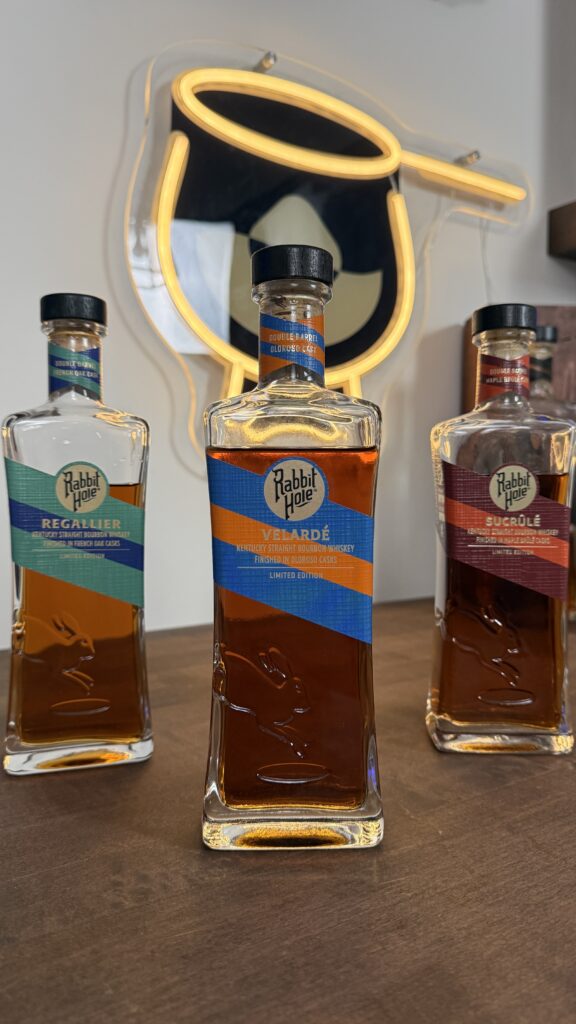
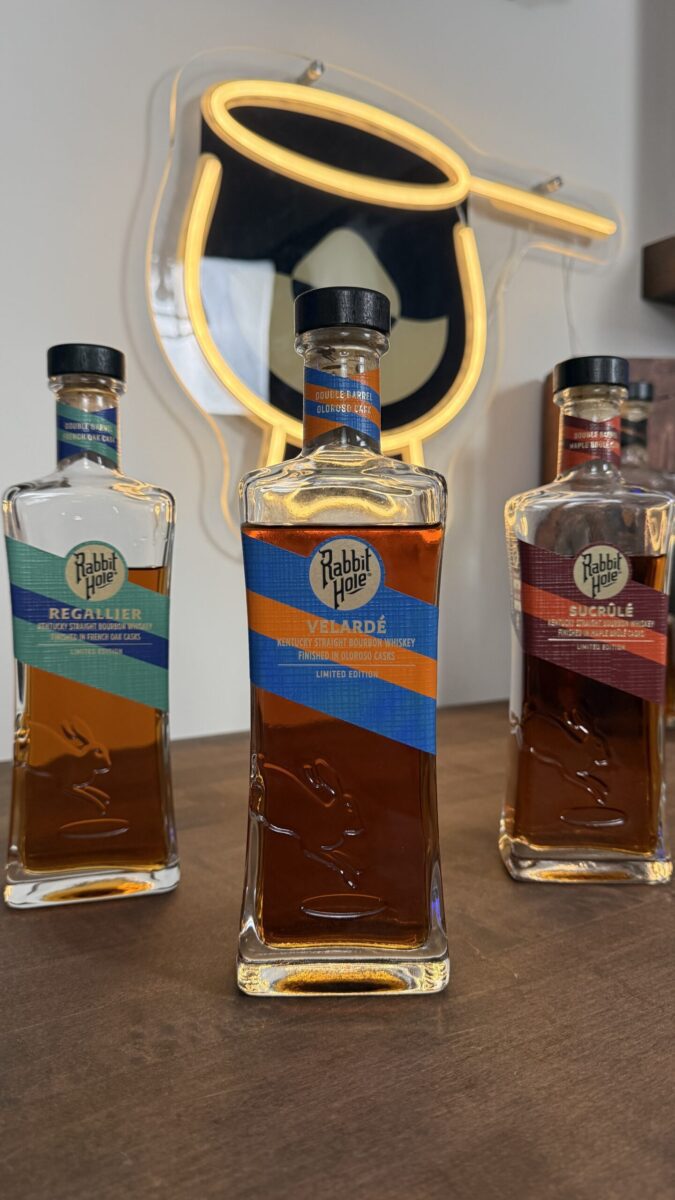
For sure, and let’s talk about that craftsmanship because one of things that I like that you all do is you create small format whiskey that people can take home with them. And as a founder, I think that’s a brilliant thing that you all did. I’m holding the, gosh, you all have funny names and I don’t pronounce them very well. Velarde, I think is what it’s called, but like these beautiful format.
Kaveh (07:05.345)
Yep. Yep.
Jake Lewellen (07:08.439)
375 so you can pick up a couple of them so you’re not like bound to a 750 Here, you know, so when you think about like innovation, I think this is innovative right creating a format where people like well I like race key or I like Kaveh Hill, but I want something unique and crafty You know, what’s it like to have this type of format available for consumers who do come on site that maybe want to buy one or two different types of expressions just versus just one expression
Kaveh (07:36.716)
Yeah, you know, I think I think it’s it’s actually pretty important from a consumer experience and for us as a brand or a brand owners, right? Because it allows us to showcase our creativity, but it also most importantly gives consumers an opportunity, like you said, to be able to once once they visit us to pick up something that they can’t get anywhere else. Right. So those distillery series that you’re referring to are things that we we put out.
Jake Lewellen (07:46.987)
Yeah.
Jake Lewellen (08:00.279)
Yeah.
Kaveh (08:05.345)
basically every three months. You know, as you know, we have so many different innovation projects in the pipeline that the distillery becomes really the channel for us to be able to showcase those things. So we keep iterating and creating while the consumers get the benefit of being able to come in. And in addition to our main line products, be able to get some unique things that they wouldn’t be able to get at their, you know, at their hometown or local liquor store.
Jake Lewellen (08:34.391)
And that’s what I appreciate, right? As someone who is in the space, like, and I go to places, right? It’s trying those expressions, seeing what’s new and innovative. Even though you have a state of the art column distillation, you know, beautiful expression. It’s like, hey, what can we do with this clean distillate to maybe push it to the next level or bring in a different type of consumer, right? You know, a lot of times men love their wives along with them on the bourbon trail and they may be more akin to
to an Oloroso sherry finish or you have the sucre which is more that maple finish expression that’s a little bit sweeter. They could enjoy that in a cocktail because it can take some of the bite away from the rye bourbon that’s in there. I think that’s the beauty of it as well is it exposes more people to a product than just the typical high rye or low rye mash bills that can be spicy to other people’s palates.
Kaveh (09:33.089)
Yeah, 100 percent, Jake, you’re absolutely right. think, for me, it’s one of those opportunities to be able to show consumers what ultimately American whiskey can be and and to be able to move beyond the kind of ABCs of high rye weeded bourbon to the range of products that could come out of a facility that is really positioning, position itself creatively to to be able to.
expand the range of flavor profiles from an American whiskey perspective. And I think the examples that you gave are really good ones where it brings a broader range of consumers to the fold. So sucralé, the maple finish is a really great example, or a mainline derringer, which is the sherry finish. Those are really great examples of how it tends to, for me, be a bit more appealing to a newer whiskey consumer that
wants something a little bit softer, maybe a little bit more subtle, while at the same time, we’re able to bring in products both on the core or the innovation that appeals potentially to a more connoisseur class consumers, right? So you kind of are able to taste through and see the range of flavors that is possible within this category.
Jake Lewellen (10:55.415)
For sure, and that’s the other thing I was gonna bring up and you said it the you know, from a core lineup perspective, this is a perfect gift bottle. If you know someone maybe into whiskey, but you don’t know what they like or you know, if they’re a weeded fan or if they’re, you know, looking for something with, you know, kind of flavor bomb, I think this is peanut butter, jelly and glass. Like that’s what I think this is like it’s.
Kaveh (11:12.365)
Ha
Jake Lewellen (11:15.415)
It’s just really well done. I love the, the weeded bourbon that goes along with it. Um, I kind of wish that that was a core product along like by itself, but you know, maybe innovation one day. Um, I can dream, um, but it’s, it’s, it’s a, it’s a great bottle. I always recommend it. It’s one of the gift bottles. It’s Woodford, double oak, derringer, and then seagrass. Like it’s all like these, uh, flavor bombs that people can enjoy and that, you know, if they just have an inkling for whiskey, they’ll probably like these because they’re a little bit elevated. You know, they’re in the 50 to
$100 range that’s the kind of bottle that I think is a gift it stands up. It’s beautiful It’s got that purple like, you know royal regal tea to it So and it’s got a cool story if especially if you’re giving it to a female it’s like hey Let me tell you about this story about how this mingling came together And it’s a it’s a great way to be like I thought of you when I bought this wife, you know, whatever or girlfriend
Kaveh (12:05.204)
Yeah, yeah, yeah. No, you’re you’re absolutely right. And by the way, Jake, I think that I can make your wish come true because the weeded bourbon base that’s for Derringer is actually offered under the Mary Dowling brand. our weeded bourbon base is part of the Mary Dowling expressions. And we have the weeded double oak as part of the Mary Dowling lineup as well. So, you know, it’s been an interesting
opportunity at Rabbit Hole, because we’re set up, as you pointed out, to do genuinely small batch expressions, experimental pieces, we have a lot of room to be versatile and create different expressions for different brands. And in that sense, Rabbit Hole has its own lane, both for the core and innovation and Mary Dowling, the same thing. And those brands don’t necessarily overlap when it comes to
the expressions that we put in the bottle. That’s really important for me because when I first started Rabbit Hole, the last thing I wanted to do was to essentially put the same liquid in different bottles like unfortunately a lot of brands do. Nothing wrong with it. I mean, it’s working for consumers. But for me, the beauty of American whiskey is to showcase the range of what’s possible liquid wise, playing around with grains, finishes and blends, of course.
Jake Lewellen (13:29.815)
Yeah, so let’s talk about Mary Dowling, right? So the mother of bourbon, there was a book that you all did last year that came out. It was awesome. It was a really great book celebrating what she did, right? In whiskey overall. And so, you know, how’s that brand taken off, right? I’ve had a couple of them. think the, oh, it’s the blue label.
Kaveh (13:53.802)
Yeah, that’s the high rye tequila finish.
Jake Lewellen (13:57.015)
Yeah, the tequila finish is really unique and then there’s a red label. Again, try to keep up with all the bottles. But I keep Mary Dowling actually in my office for like when I’m finishing up work late at night, that’s kind of one of the ones I pour. Because you don’t have think about it. You can just sit there and you can enjoy it. So how’s that brand kind of taken off adjacent to, know, Rabbit Hole, which is a more full-scale distillery. You know, it’s got the whole thing behind it where Mary Dowling has a story and a book, right?
Kaveh (14:05.536)
Sure, sure.
Jake Lewellen (14:26.998)
but like it’s a different avenue of storytelling.
Kaveh (14:30.432)
Yeah, you know, that goes in some ways back to your earlier point regarding what are the macro conditions within the business and the industry. And Rabbit Hole started at a time where which was early in that craft movement and the bourbon boom, whereas Mary Dowling came at a time where we were beginning to kind of wind down a little bit from that cycle standpoint. So, you know, it’s been a good start, but I would say relative to our initial start with Rabbit Hole, not as
Jake Lewellen (14:43.788)
Mm-hmm.
Kaveh (14:59.914)
not as exciting. think right now, as we talked about, it’s a challenging time because there’s way too many brands on the market and we’re all vying for shelf position and our ability to tell that story. The good news is that Mary Dowling’s story is very compelling and engaging. And more importantly, the good news is that the liquid is fantastic. The purple label is the Weed at Bourbon, red label is the
weeded double oak and I will put those up against any of the great weeded bourbons in the market right now. And then of course the high-ride tequila finish is a very unique pour if people are looking for something that is quite different. So, you know, it’s getting good traction but it’s a bit of a slog compared to, you know, when we started rabbit hole 14 years ago.
Jake Lewellen (15:52.631)
Yeah, for sure. I can’t believe rabbit hole is 14 years old. Like that’s, that’s crazy to think about, right? You know, you know, little, are you coming from Chicago to Kentucky? You know, things change in a heartbeat there. And then, then you have kind of your, you’re kind of like, these are your base, right? But then you have like Masha Mello, which is a really interesting kind of offshoot, right? It’s a, it’s a really cool looking bottle.
Kaveh (16:02.593)
Yep, yep.
Jake Lewellen (16:20.21)
And you know, how did you come up with that? I mean, you actually have, don’t think we’ve ever talked about this in the couple episodes we’ve done, but like, how did that kind of become a thing? Cause it’s, so unique and different than the other two.
Kaveh (16:32.308)
Yeah, you know, I think the roots of it actually go back to those early days of rabbit hole, because as I was laying down liquid for rabbit hole, we this is probably most people don’t know about it. We actually launched a brand called Kentucky Moonshine back in the day, and it was essentially, you know, flavored whiskey, flavored vodka. So the intersection of mingling basically some base liquid with flavors to create some interesting expressions.
goes back to my early days. And ultimately, you know, about three, four years ago, I was really intrigued about the prospect of doing a flavored whiskey that has a really solid base and doesn’t have the typical kind of artificial flavoring that you get with a lot of flavored whiskeys. So we started with a corn whiskey base with a little bit of hint of rye and worked with a flavor house to be able to create essentially
all the flavors that we all know and love when it comes to s’mores, including the smokiness that we get with s’mores. So, you know, it took a good amount of time. I mean, this is basically probably 12, 10 to 12 months of back and forth to dial everything in. And ultimately, my goal with that was to create a high end flavored whiskey that’s a little bit more playful, a little more whimsical, maybe even for consumers that are
Jake Lewellen (17:38.551)
Yeah.
Kaveh (18:00.906)
really super entry to the whiskey category, right? That we all kind of all started in that way, most typically from white spirits to brown spirits and to get more to sophisticated brown spirits. And that’s kind of where the thinking was.
Jake Lewellen (18:04.812)
Mm-hmm.
Jake Lewellen (18:18.423)
Yeah.
No, it’s really cool because if anyone’s done the Stave and Thief Society, you’re next to Flavor Man, and you can see how people can create these flavors. I mean, it’s absolutely insane what these flavoring houses can do and what they can create and how spot on they are. And there’s ones all over the country, but that’s the one I’m exposed to, right? Because it’s down here in Louisville. And it’s just really interesting because now you have a swath of a portfolio where you all can pull from and find lanes of innovation.
Kaveh (18:32.991)
Yeah.
Jake Lewellen (18:48.942)
That is not necessarily just one specific thing, right? And you know like with the the marshmallow brand you can there’s other things that are kind of smoky, right? There’s other things that you can kind of lean into that brain if you ever want to do an offshoot, right? Like and so I think that’s really a unique, you know flavor profile To mess with now. I’m not saying that I necessarily mess with a lot of flavored whiskeys. I don’t but you know, I’m more
Kaveh (19:03.691)
Sure.
Jake Lewellen (19:17.526)
I’m up for a game if somebody wants to try it and make some fun cocktails. I’m not gonna say no to anything when it comes to that. let’s put on your hat a little bit to think forward. A lot of times we hear in our space how cost of barrels have gone down and there’s aged whiskey on the market.
Kaveh (19:20.427)
You
Jake Lewellen (19:44.025)
if you were to kind of redo this and put your, you know, you’re starting over again, right? How, like, how do you balance like buying and sourcing with, you know, being able to, let’s say you have a still and you can contract distiller, you have a distillery and it’s small scale, like how would you go about balancing all of that, right? From a, you know, hey, I can get this good five, six year old Kentucky whiskey for, you know, eight, $900 a barrel, right? Which is cheaper than a barrel was four years ago.
Kaveh (20:11.339)
Mm-hmm.
Jake Lewellen (20:12.298)
And then, know, maybe I want to run some, you know, crafty whiskey on the still. Like, how would you go about rebuilding a brand? Because I think as a founder, it’s really interesting. You started at the beginning of the bourbon boom. Now we’re in this lull. Like, could you do it again? Or would there be something you would do to kind of like the way the market is to build, you know, an offshoot of something that you’re already doing?
Kaveh (20:33.419)
I think if I was starting today, it would be a very different series of steps. I don’t think, for example, I would build a distillery right now. You know, when I started, it was a different landscape. There was a shortage of production facilities. The facilities that were there were not engaged in contract. Or if they did start contract, it was really limited to what they would produce for you. And you had no
Jake Lewellen (20:40.161)
Yeah.
Jake Lewellen (20:44.45)
Mm-hmm.
Kaveh (21:01.083)
options as far as mash builds and finishes and things like that. And it was an opportunity to build a distillery to create a space production facility for our own brand, but also potentially offer some contract for other folks. Now, the state of affairs being what they are, if I was getting started, honestly, I would essentially just reach out and try to find quality barrels and go from there.
and it would probably be more of a blending model. Or if I really wanted to exercise patience and create something unique, I would have lots of opportunity for contract distillation. So that definitely, if I was starting today, I would not build a distillery. It would be leaning on existing facilities or tapping into existing stock that’s available on the market. I mean, that’s probably the most important change.
Jake Lewellen (21:58.916)
Yeah.
Kaveh (21:59.028)
I think the other piece that I would say is this is just a simple lesson learned over the years is that, you you can have the most incredible liquid, but the reality is the route to market is the main issue that you have to contend with because selling the product is probably the most costly and challenging part of this whole endeavor. And if you are not mindful of that, you can sink pretty fast.
And that would be one of the things that I think is really an important, you know, for any budding entrepreneur or folks that want to get in the industry right now, that’s the main thing I would say they need to be mindful of.
Jake Lewellen (22:40.823)
Yeah, I mean, I think it’s interesting, right? We’re seeing the three tier system go through a huge shake up right now. And you’re seeing, you know, brands.
you know, like Diageo build a whole warehousing facility like in Alabama or, you know, all these things. So you’re seeing the change happen right in front of our eyes. You know, what happened with D2C and all of these things. And so, you know, the market’s gonna shift and it’s gonna be really interesting how that impacts, you know, consumers as that shifts and how it impacts wholesalers and how it impacts stores. Can they get the whiskey right? Is it gonna move more online for allocation? All those things. I think the next five,
years are going to be very interesting from that whole selling model that I’m just interested to see how it changes.
Kaveh (23:29.439)
Yeah, no, I think you’re absolutely right. think the distribution channel is under a lot of pressure. We all know about the shift that’s happening from landscape standpoint with R &D C’s kind of struggles and demise and the new players gaining ground and trying to kind of redo the map if you would. As a result, obviously a lot of particularly smaller brands are fighting to get
share a mind from the distributor. Of course, the Ecom channel has not, I think, grown as fast as everybody had hoped for. So I think these are all things that are headwinds, right? And I think that you’re absolutely right. In the next four five years, we’re going to see things really shake up even more. And I think likely the business is going to be, the market’s going to be in a very different place than where we are right now.
Jake Lewellen (24:25.869)
Yeah, and who knows, like the barrel production may ramp up by then, right? Like we could be at a place where we’re swinging because there’s shortage and now we need to roll. It’s kind of hard to think that there might be shortage of barrels when there’s like 14 or 15 million of them just aging in little old Kentucky. But, you know, I think there’s actually more than that. mean, four or five years ago, there was four million. There was one for like everyone that lived in the state. Now it’s like five X that it’s absolutely insane what brands like yourself and
You know, heaven, hell, like all the brands, like they’ve just been able to put out so much whiskey. But it’s, I…
I always say it’s the golden age for the consumer. Because you’re to be able to see anything you want to see on shelves is going to come out. People are going to do experimental finishes. You’re going to see ultra-aged whiskey. You’re going to see new inventions, new heirloom types of things. You’re going to just see all types of stuff come to market. And it should be affordable because it’s all going to be pushed down because people won’t have to spend.
you know, everyone will have a 14, 15, 16 year old whiskey, so you can’t price yourself at $500 if, you know, other bottles at $250. Like you have to price yourself into the grouping. So it’s gonna be a great time for a consumer to try all types of whiskey from all over the country that are unique and different. And I think that’s probably one of the cool things. I know it’s bad for the brands, but it’s cool for the consumer perspective.
Kaveh (25:53.043)
Yeah, no, I think you’re right. know, the economics of the business have changed and they’re going to continue to change. I think there’s a price pressure across the board. I think the benefit is to the consumer, both from a standpoint of being able to pay less or have they don’t have to pay as much for a bottle of bourbon. But more importantly, they’re able to get higher quality and probably higher age products, especially in the coming years, because
Jake Lewellen (26:20.938)
Mm-hmm.
Kaveh (26:21.362)
There is a lot of inventory on hand. And I think, you you’re going to see creative people coming in and creative brands continuing to take advantage and be able to create products that are more appealing to consumers. But economically speaking, yeah, the model has changed. And with what’s happening here, it is more of we’re going in the direction of benefit to consumers for sure.
Jake Lewellen (26:47.959)
Yeah, and it’s all swings, right? When I first bought my first bottle of bourbon, there was no such thing as allocation. And the Pappy’s and the Wellers and everything else sat on shelves for 25 to 70 bucks, right? And now we’re starting to see more and more of those bottles show up, right? When you go to your favorite liquor store, you can pretty much call whatever you want now, which is great. But it does make the shelves a little bit more crowded. It does make it a little more respectful.
Kaveh (27:02.186)
Mm-hmm.
Jake Lewellen (27:17.913)
where I kind of sit as a consumer but also as a kind of a coverage person.
I can see the struggles on both sides of the fence, right? It’s great for the consumer, it’s tough for the brands. the hard part is as you get into this space, we’re seven, eight years into this, you get to know the people, right? So we get to know you, we get to know X, Y, and Z. it’s like, those are our friends that are losing jobs or seeing cuts and all of these things. And so you’re like, hey, I need to support them. We need to continue to tell stories. We need to continue to get new people picking up a bottle of rabbit hole or picking up a bottle of whatever, because we don’t want
our friends to lose their jobs because that’s ultimately what this becomes bourbon and whiskey has always been about surrounding each other arms around each other and i think we’ll get through it it just seems a little little shady right now versus it the sunny times we had just a couple years ago
Kaveh (28:09.109)
Yeah, I really appreciate you bringing that up because there is an industry and there’s a lot behind this industry. There’s a lot of folks that are engaged, very passionate, hardworking people that are impacted by the swings up and down. And I think it’s really this type of thoughtfulness that matters to make sure that we don’t lose sight of the people that have created these brands or working on these products.
And there’s an industry here that’s particularly here in Kentucky, but not just Kentucky. Across the country, it has a lot of impact. American whiskey is a big part of what, you know, not only we do in Kentucky, but part of the broader industry. And I think it has impacted all levels from production to supplier side, to the distributor side, to the retail side of it. And ultimately,
being mindful of that and supporting the community and those people in it, to me is really important.
Jake Lewellen (29:11.127)
Yeah, no, I couldn’t agree more. And, you know, know you all are ingrained in doing that and making sure that, you know, your all’s teams taken care of across the board. and that, you know, as, as people still descend upon Louisville, Kentucky, it’s still the Mecca of horse racing and the Mecca of bourbon, right? Like it, it’s all right here and you don’t have to leave downtown Louisville anymore. You don’t have to go to Barchtown if you don’t want to. Might as well go see it if you’re close enough, but you can do everything you want. You can see, you know, things from.
from Angels Envy to Rabbit Hole to all the things on Whiskey Row. There’s just so much to do here in the city and I think you all are a core part of that. So, thanks for planting roots here. I think as a Louisvillean, I remember when downtown was a desolate wasteland growing up.
And Mayor Abramson started it all with changing the riverfront and making it attractive for people to build downtown, be downtown, and then create opportunities for Nulu to pop up and see Whiskey Row come back to life. because of things that you did, I don’t think you all get enough credit. You all planted roots here in Louisville, and that helped revitalize an area of town that wasn’t so awesome for a long period of time. So thanks for what you’ve done.
Kaveh (30:25.268)
No, really. Thank you, Jake. I really appreciate it. It’s nice to be acknowledged for that. know, Louisville is home now. And I think for me, it’s really important to be able to make sure that we continue to invest in our community and keep building and growing, even when we have some challenging times. I think the good news is that, know, like you were saying, tourism is big. And that’s one of the most important kind of bright spots right now.
I think along those lines, consumers today are more curious and more informed than ever. I think they want authenticity. think they want transparency. I think they’re interested in experiential and discovery of things. And I think in that sense, you know, we’re well positioned to showcase our brands and ultimately honor the heritage of Kentucky, but also, you know, get people excited about what fresh ideas we can all bring to the table.
Jake Lewellen (30:59.289)
Yeah.
Kaveh (31:22.546)
on the rabbit hole side, but also all the other great brands that are here and are showcased in our hometown.
Jake Lewellen (31:29.177)
Yep, no, it’s awesome. And I just want to say again, thank you, but thanks for spending some time with us to talk a little bit about rabbit hole, Mary Dowling, Masha Mello and all the things that y’all are doing. So thanks everybody for listening to this episode of the Bourbon Lens. We’ll catch you next time. Cheers.
Kaveh (31:34.942)
Of course.
Kaveh (31:45.579)
Cheers.