LOUISVILLE, Ky. — The Bourbon Lens podcast’s “Five Minute Fridays” series put Louisville Pure Tap head-to-head against three popular bottled water brands in a side-by-side tasting, walking listeners through the same look, sniff, swirl, and sip method water professionals use to evaluate flavor and quality every day.
Host Jake was joined by Kelly Deering Smith of Louisville Water for the comparison, which included Dasani, Evian, Gerolsteiner, and Louisville Pure Tap. Smith explained that the goal wasn’t to crown a winner, but to help listeners understand what actually shapes the way water tastes.
“Now the goal is not to find a favorite, although you may have one. I want you to understand the profile and why water tastes the way it does. Because this is actually, Jake, a test we do in the lab every day. We do taste tests,” Smith said.
The tasting centered on total dissolved solids (TDS), a key measure of the minerals and compounds picked up from a water’s source. “What gives water its profile, its taste has to do with the source and the treatment. But there’s one thing in particular that we talk about, and that’s total dissolved solids,” Smith explained.
Dasani, a highly processed bottled water, measured just 30 TDS. “This is tap water that’s been run through another process. So basically a lot of things stripped out of it. Kind of basic,” Smith said.
Evian, by comparison, showed a significantly higher mineral profile. “So this is a spring water, a much higher total dissolved solid. So we started with thirty. Now we’ve moved to around three hundred and forty five. So definitely picking up the influence of the rocks that they’re that the water is going over,” Smith said.
Gerolsteiner, a natural mineral water, measured 2,400 TDS — the highest of the tasting. “So we have gone from one extreme to the other. Now, this type of experiment we’re doing, total dissolved solid, is more of an aesthetic thing. It’s not the primary regulation for drinking water utilities. It’s secondary,” Smith noted. “Ideally we don’t want to be more than five hundred for tap water.”
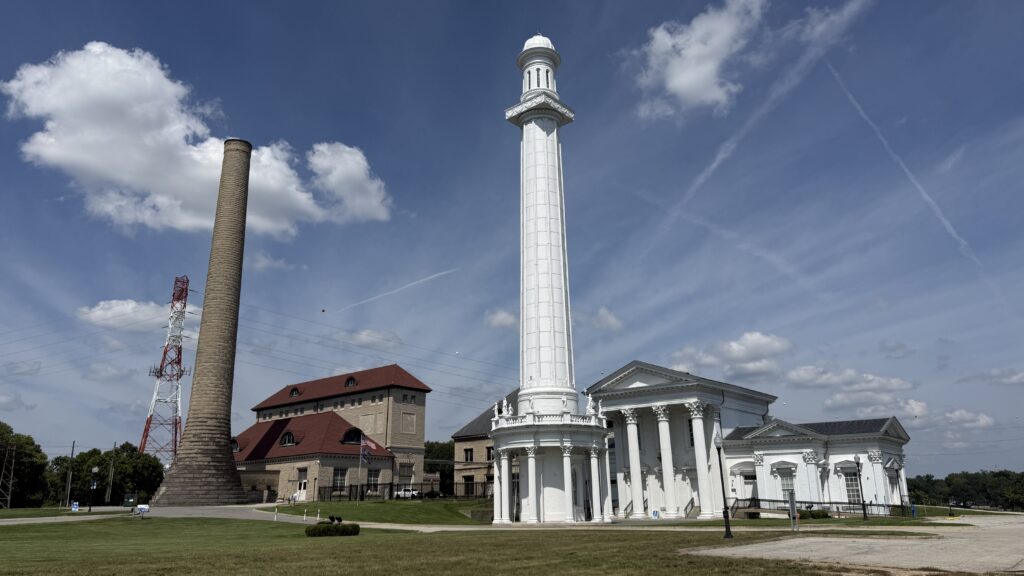
Louisville Pure Tap landed at 240 TDS, a profile Smith attributes to the region’s geology. “Our total dissolved solids is around two hundred and forty. So parts per million. Again, influence of the limestone, the Ohio River, that’s what you’re picking up. So we’re very similar to Evian in terms of that measurement,” Smith said.
Smith encouraged listeners to try a similar tasting at home. “You could pick any four waters that you want. I want you to sample them from a flavor profile, but also a feel… The goal is to understand water’s story,” Smith said.
The full episode is available now on the Bourbon Lens podcast. More information on Louisville Water’s tap water program is available at LouisvilleWater.com.
About Bourbon Lens
Bourbon Lens is a podcast dedicated to exploring Kentucky’s bourbon culture, history, and the people and places that shape it. New episodes are released weekly, featuring conversations with industry experts, historians, and Kentucky insiders.
Follow Bourbon Lens
🔔 Subscribe for more weekly discussions, tastings, and bourbon insights from the Bourbon Lens community.
- 📸 Follow on Instagram: @bourbonlens
- 🌐 Visit: www.bourbonlens.com
- 👕 Merch: https://bourbon-lens-shop.printify.me/products
- 💬 Discord: https://discord.gg/pd6ys5nRSU
Latest Bourbon & Whiskey News
- The Still Austin Quarter Opens in South Austin, With Shakey Graves Headlining the Nov. 5 Grand Opening

- 2XO and The Sugarhill Gang Release “Rapper’s Delight” The Hip-Hop Blend
- Buffalo Trace Honors 40 Years of Elmer T. Lee With First-Ever Uncut and Unfiltered Single Barrel Bourbon
- Karuizawa 52-Year-Old “The Prototype” Sells for $625,000, Leading Sotheby’s $14.3 Million Nightcap Sale
- Bunnahabhain 12 Year Old Cask Strength 2026 Edition Returns for Scotchtober
- The Macallan Unveils TIME : SPACE Sherry Cask, Its First Whisky Shaped by Its Own Valdespino Sherry Casks